Giant star swallowing companion has been observed for seven years, providing a direct look at the evolution of common envelopes in the Andromeda Galaxy.
What is the Andromeda Galaxy?
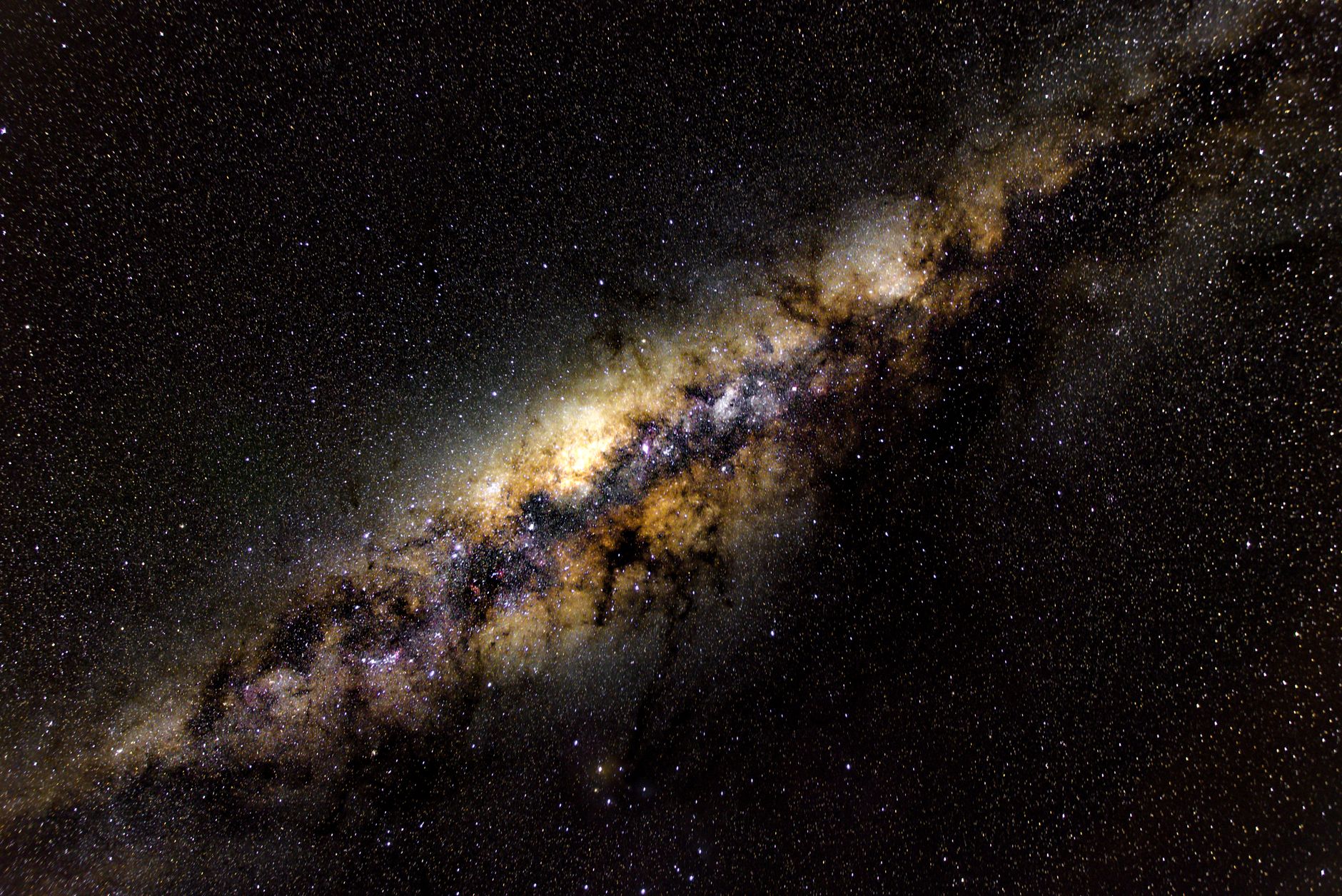
The Andromeda Galaxy, known as M31, is a spiral galaxy located approximately 2.537 million light-years from Earth. It is the nearest major galaxy to our Milky Way and plays a significant role in our understanding of the universe.
Containing over a trillion stars, Andromeda is rich in fascinating astronomical phenomena. Its vast collection includes:
- Numerous star clusters
- Active star-forming regions
- Supermassive black holes
Recent observations have revealed intriguing events within this galaxy, including a giant star swallowing a companion. This discovery offers a direct look at common envelope evolution, enhancing our understanding of stellar interactions and the life cycles of stars within Andromeda.
As researchers continue to study this remarkable galaxy, they hope to uncover more about the processes that drive such dramatic cosmic events.
The significance of common envelope evolution
The recent discovery of a giant star swallowing companion sheds light on the intricate process known as common envelope evolution. This phenomenon occurs when a star expands and engulfs its neighboring companion, leading to a complex interplay between the two celestial bodies.
Understanding common envelope evolution is crucial for several reasons:
- Astrophysical Insights: It provides key insights into stellar evolution and the life cycles of stars.
- Binary Systems: This process is particularly significant in binary star systems, affecting their eventual fate.
- Gravitational Waves: The interactions during this evolution can lead to events that generate gravitational waves, which are important for modern astrophysics.
- Cosmic Element Formation: It plays a role in the formation of heavy elements, contributing to the chemical diversity of the universe.
Overall, the observation of a giant star swallowing companion marks a significant milestone in our understanding of these cosmic processes.
How the observation was conducted
The groundbreaking observation of a giant star swallowing its companion was conducted over a span of seven years by a dedicated team of astronomers. Utilizing advanced telescopic technology, they meticulously monitored the Andromeda Galaxy, focusing on a specific binary star system. This system was chosen due to its unique characteristics that hinted at the potential for common envelope evolution.
The team employed a combination of spectral analysis and photometric measurements to capture changes in the light emitted by the stars. They noted fluctuating brightness levels, indicating the interaction between the giant star and its companion. This comprehensive approach allowed researchers to gather valuable data, shedding light on the complex dynamics of stellar evolution and the process of one star engulfing another.
Such observations enhance our understanding of stellar life cycles and the phenomena occurring within galaxies like Andromeda.
Impact on our understanding of stars
The recent discovery of a giant star swallowing its companion has profound implications for our understanding of stellar evolution. This event sheds light on the complex processes occurring within binary star systems, particularly in the context of common envelope evolution.
Previously, this phenomenon was largely theoretical, but the direct observation provides concrete evidence of how such interactions can reshape stars. The implications are significant:
- Enhanced knowledge of stellar lifecycles: Understanding how giant stars interact with companions can refine models of stellar evolution.
- Insights into supernova mechanisms: This research may clarify the conditions that lead to supernova explosions.
- Broader implications for galaxy evolution: The findings could influence theories regarding the formation and growth of galaxies, including our own Milky Way.
Overall, this discovery marks a pivotal moment in astrophysics, expanding our grasp of the universe’s intricate workings.
The future of astronomical observations
The future of astronomical observations looks promising, particularly in the study of phenomena like a giant star swallowing its companion. With advancements in technology and observational techniques, astronomers are poised to investigate more complex events in the universe.
The recent discovery in the Andromeda Galaxy emphasizes the importance of long-term observations. These efforts allow scientists to track stellar evolution over extensive periods, leading to groundbreaking insights. As telescopes become increasingly sensitive and capable, the potential for uncovering similar cosmic events grows.
Moreover, collaborations across global observatories are enhancing data sharing and analysis, enabling a richer understanding of stellar interactions. As researchers continue to explore the intricacies of phenomena such as common envelope evolution, the results may reshape our understanding of stellar life cycles and the fate of binary star systems.
What this means for stellar life cycles
The recent discovery of a giant star swallowing its companion provides critical insights into stellar life cycles. This event highlights the intricate processes involved in common envelope evolution, where a dying star engulfs its partner, leading to significant changes in their evolutionary paths. Understanding this phenomenon is essential for astronomers, as it sheds light on how such interactions influence the formation of various celestial bodies.
Moreover, this finding emphasizes the complexity of stellar dynamics in galaxies like Andromeda. As researchers continue to study the implications of a giant star swallowing its companion, they can refine their models of stellar evolution, ultimately enhancing our comprehension of the life cycles of stars.
- Insights into stellar mergers
- Implications for understanding supernovae
- Broader impacts on galaxy evolution
Expert opinions on the findings
Experts in the field have expressed excitement over the recent discovery of a giant star swallowing its companion in the Andromeda Galaxy. Dr. Emily Carter, an astrophysicist at the Institute for Cosmic Research, noted, “This observation provides invaluable insight into the process of common envelope evolution, which has long been a theoretical concept.” She emphasized that capturing such an event directly allows scientists to refine existing models of stellar interactions.
Another prominent astrophysicist, Dr. Raj Patel, remarked, “The implications of a giant star swallowing its companion extend beyond this single observation; it enhances our understanding of how stars evolve and influence their environments.” The consensus among researchers is that this discovery could lead to breakthroughs in stellar life cycles and the dynamics of galaxies.
As further observations unfold, the scientific community eagerly anticipates what additional findings may emerge from this groundbreaking research.
Recent observations have shed light on the fascinating phenomenon of a giant star swallowing companion, providing new insights into stellar evolution. This discovery not only confirms previous theories but also opens up new avenues for research on the lifecycle of massive stars, particularly in relation to a giant star swallowing companion.
Photo by Zelch Csaba on Pexels
Sources
Voyager 1 distance milestone: Clear confirmation from NASA · Apple iCloud+ perks: Get Smart Benefits and Higher AI Usage · Siddaramaiah Book Launch Seat: Clear Misunderstanding Explained